
SENIOR KINDERGARTEN · 5 to under 6 YEARS
Confidence for the next chapter.
Curiosity for the chapters after.
Senior KG brings greater independence, sustained thinking and early literacy and numeracy together, while keeping learning connected to play and real experiences.
Entry age
5 to under 6 years
Proposed session
9:00 AM–1:00 PM
Weekly rhythm
Monday–Friday
WHAT CHILDREN MIGHT EXPLORE
Learning you can picture.
01
Language with purpose
Retell events, discuss stories and explore meaningful reading and writing experiences.
02
Numbers in context
Solve practical sharing, measuring, counting and comparison problems.
03
Readiness beyond worksheets
Organise belongings, ask for help, collaborate and explain an idea.
A rhythm to the day.
This is an illustrative sequence, not a fixed timetable. Activities and settling support should adapt to the group and individual needs.
01
Plan and participate
Discuss an idea and choose how to begin.
02
Explore in depth
Stay with an investigation, construction or creative task.
03
Apply and collaborate
Use developing skills in shared practical experiences.
04
Review and prepare
Reflect on learning and manage the next routine with support.
Small moments
of growing confidence.
Progress might appear in a child returning to an activity, asking a clearer question, trying a new strategy or joining a shared experience. These examples help make development understandable without ranking children.
Our proposed observation and parent discussion process looks for these meaningful steps over time.
Try a little
discovery at home.
Invite your child to organise a simple task such as setting out materials. Talk about the steps rather than doing every step for them.
Choosing the right starting point
Age is referenced to 1 June of the admission year. Individual placement, care needs and programme availability are discussed with the team. The programme times above are planning details to confirm before enrolment.
WHAT LEARNING CAN LOOK LIKE
Ready to participate, confident to keep learning
Early literacy with understanding
Stories, conversation, sound awareness, meaningful print and early writing experiences build connected foundations. Children have opportunities to describe, explain and create, with support appropriate to their stage.
Mathematical reasoning
Practical challenges can involve counting, combining groups, comparing measures, noticing patterns and explaining choices. Concrete materials help children make sense of an idea before relying on symbols.
Independence in a community
Managing belongings, following a short sequence, asking for help and contributing to shared responsibilities support the move to a new classroom. Independence grows through repeated, supported opportunities.
A thoughtful transition
Families should discuss the receiving school’s age criteria and expectations in good time. Sharing observations about strengths, interests and useful support can help adults plan a smoother next step.
At home, keep it simple.
A few relaxed minutes of shared attention are often more useful than a long task. Choose an activity your child enjoys and stop before it becomes a struggle.
- Read together and ask your child to predict or explain one part.
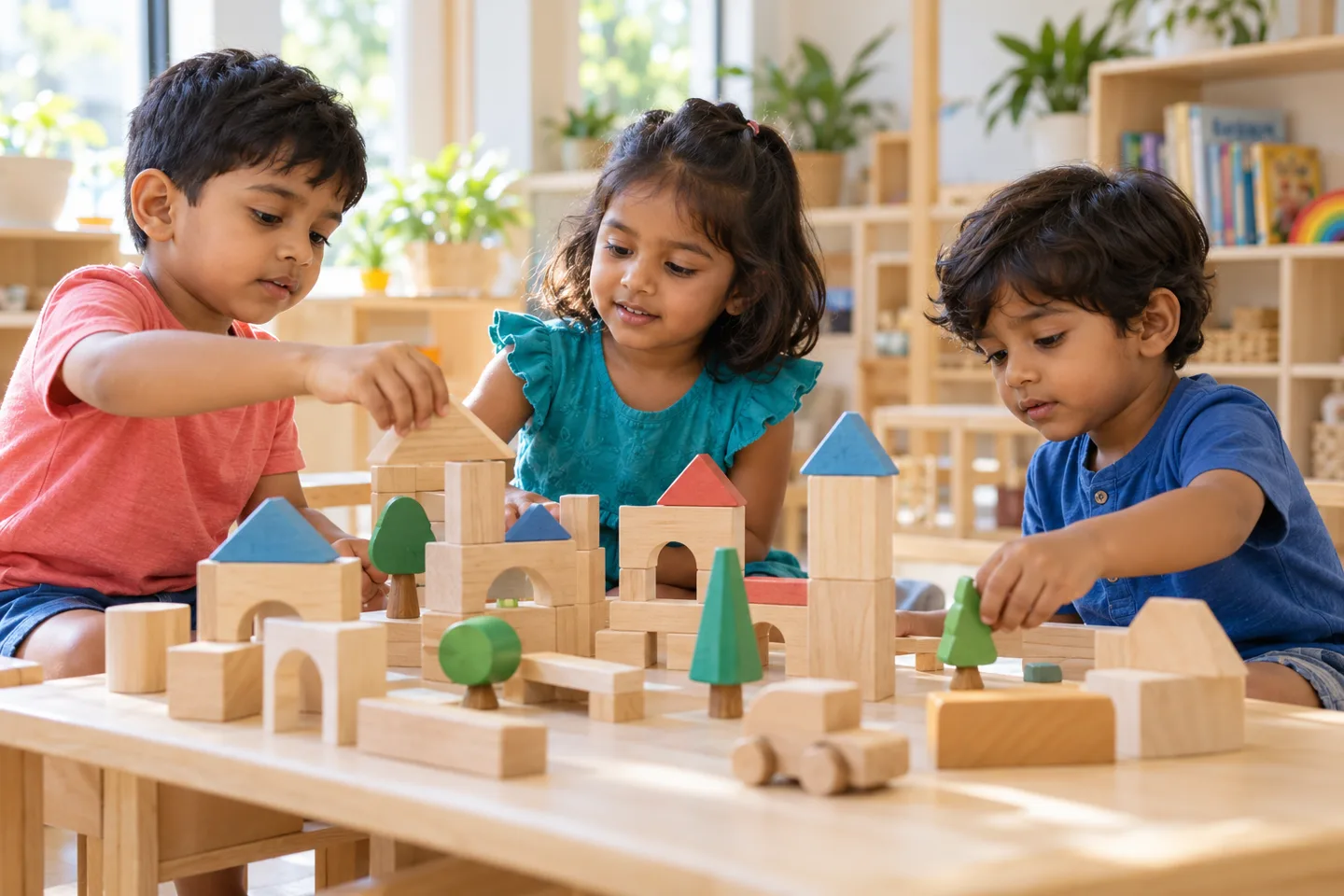
- Invite your child to plan and describe a small building project.
- Practise packing a bag with a simple picture checklist.
These examples illustrate the planned learning approach, not fixed milestones or promises of a particular outcome.
Next: Explore a sample preschool day · How learning can be observed · Discuss a place
YOUR QUESTIONS, THOUGHTFULLY ANSWERED
Useful to know.
Is Senior Kindergarten the same as UKG?
Senior KG is the familiar UKG stage in our proposed programme naming.
What is the proposed entry age?
The proposed band is 5 to under 6 on 1 June. Check the next school’s entry rules before deciding placement.
Do you guarantee admission to a primary school?
No. Receiving schools set their own admission criteria and processes.
How will transition readiness be supported?
The proposed approach develops communication, literacy and numeracy foundations, independence, cooperation and routines. It does not rely on ranking children.
NEED ADDITIONAL CARE?
Plan the complete day.
If you need care beyond the preschool session, discuss a daycare add-on. Confirm hours, handover, meals, rest and collection as one complete arrangement.
Explore daycare ↗CONTINUE LEARNING WITH TRICEF
Looking beyond the preschool years?
TRICEF Academy offers school tuition and separate language and enrichment programmes in Padappai. Explore the programme that fits your family.