
A PARTNERSHIP WITH FAMILIES
You know your child.
We want to learn with you.
Starting preschool is a transition for the whole family. Clear conversations and predictable routines can make that transition feel more manageable.
01
Before the first day
Share your child’s interests, home language, routines, comforts and support needs. Ask about the actual centre arrangements.
02
During settling
Agree a practical approach to arrival, separation and communication, and revisit it when needed.
03
As confidence grows
Use observations and everyday examples to discuss what your child is exploring and a useful next step.
Ask about the moment,
not only the milestone.
Instead of asking only whether a skill has been mastered, ask what your child chose, what they returned to, whom they connected with and how they responded to a challenge.
A specific example often leads to a more useful conversation than a broad label such as “good”, “shy” or “clever”.
A small invitation for home.
- Retell one part of a familiar story together.
- Notice and describe something on a walk.
- Let your child help organise a simple everyday task.
- Listen to an explanation without rushing to correct it.
- Choose a printable only if it adds enjoyment to the moment.
When you have a concern
Ask for a conversation with the centre team. Explain what you have noticed and what support you are seeking. Developmental or medical concerns need appropriate qualified advice; a preschool activity or observation is not a diagnosis.
Monthly brief updates and termly parent discussions are the proposed communication model. Confirm the actual process before enrolment.
Come with questions.
Leave with a clearer picture.
Tell us about your child and what you hope for in their first learning experience.
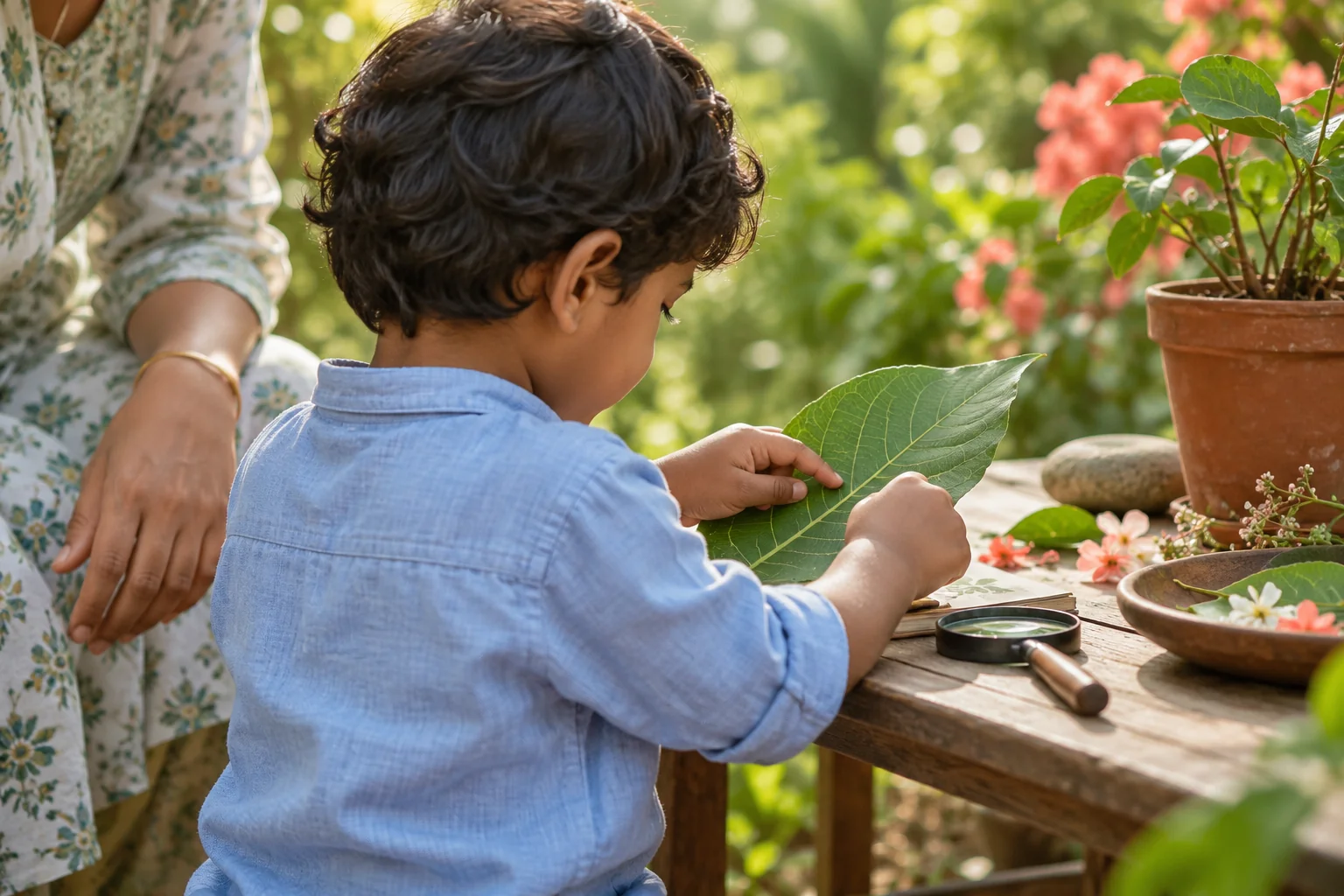
WORKING TOGETHER
Small, specific conversations build trust.
Before a child joins
Share your child’s interests, preferred name, home languages, comforts and any care or support needs. A fuller picture helps adults plan a considerate welcome.
During ordinary weeks
Useful exchanges are specific: a new friendship, a question that kept returning or a routine becoming easier. Families can share changes at home that may affect the school day.
When progress needs a conversation
Ask for examples of what has been observed, what support has been tried and what the next step might be. Agree how and when to revisit the discussion.
When something has gone wrong
Raise the concern promptly with the team. Explain the event, impact and outcome you are seeking. Sensitive matters should move to a private conversation with the responsible person.
Learning together at home
You do not need to recreate a classroom. Shared reading, conversation, safe household tasks and noticing the world on a walk can create meaningful opportunities to practise language and independence.
Explore practical parent guides · Read about observing progress
A USEFUL TWO-WAY CONVERSATION
What helps us understand your child?
Share small observations: a new interest, a difficult goodbye, a phrase your child uses at home or a change in routine. Ask the educator for a specific example of participation rather than a general label such as “good” or “quiet”.
For daycare, agree the handover information that matters: meals, rest, comfort, personal care and any incident requiring follow-up. Confirm the actual communication channel and expected response arrangements with the team.
CONTINUE LEARNING WITH TRICEF
Looking beyond the preschool years?
TRICEF Academy offers school tuition and separate language and enrichment programmes in Padappai. Explore the programme that fits your family.