
PLAYGROUP · 2 to under 3 YEARS
A small step away from home.
A big step towards belonging.
At this stage, feeling comfortable in a new place is part of the learning. Playgroup is designed around reassuring relationships, familiar routines and playful exploration.
Entry age
2 to under 3 years
Proposed session
9:00–11:30 AM
Weekly rhythm
Monday–Friday
WHAT CHILDREN MIGHT EXPLORE
Learning you can picture.
01
Sensory discovery
Scooping, pouring and exploring textures with safe, age-appropriate materials.
02
Finding a voice
Songs, repeated stories, gestures and short conversations connected to everyday actions.
03
Moving and trying
Carrying, building, balancing and making marks with increasing control.
A rhythm to the day.
This is an illustrative sequence, not a fixed timetable. Activities and settling support should adapt to the group and individual needs.
01
A familiar welcome
Choose a simple activity and settle with support.
02
Play and connection
Explore materials alongside other children and an educator.
03
Care and movement
Practise snack, handwashing and a movement game.
04
A gentle goodbye
Share a short story or rhyme and prepare for collection.
Small moments
of growing confidence.
Progress might appear in a child returning to an activity, asking a clearer question, trying a new strategy or joining a shared experience. These examples help make development understandable without ranking children.
Our proposed observation and parent discussion process looks for these meaningful steps over time.
Try a little
discovery at home.
Begin with brief, predictable goodbyes and a reassuring routine. Discuss how the centre can support your child before making changes at home.
Choosing the right starting point
Age is referenced to 1 June of the admission year. Individual placement, care needs and programme availability are discussed with the team. The programme times above are planning details to confirm before enrolment.
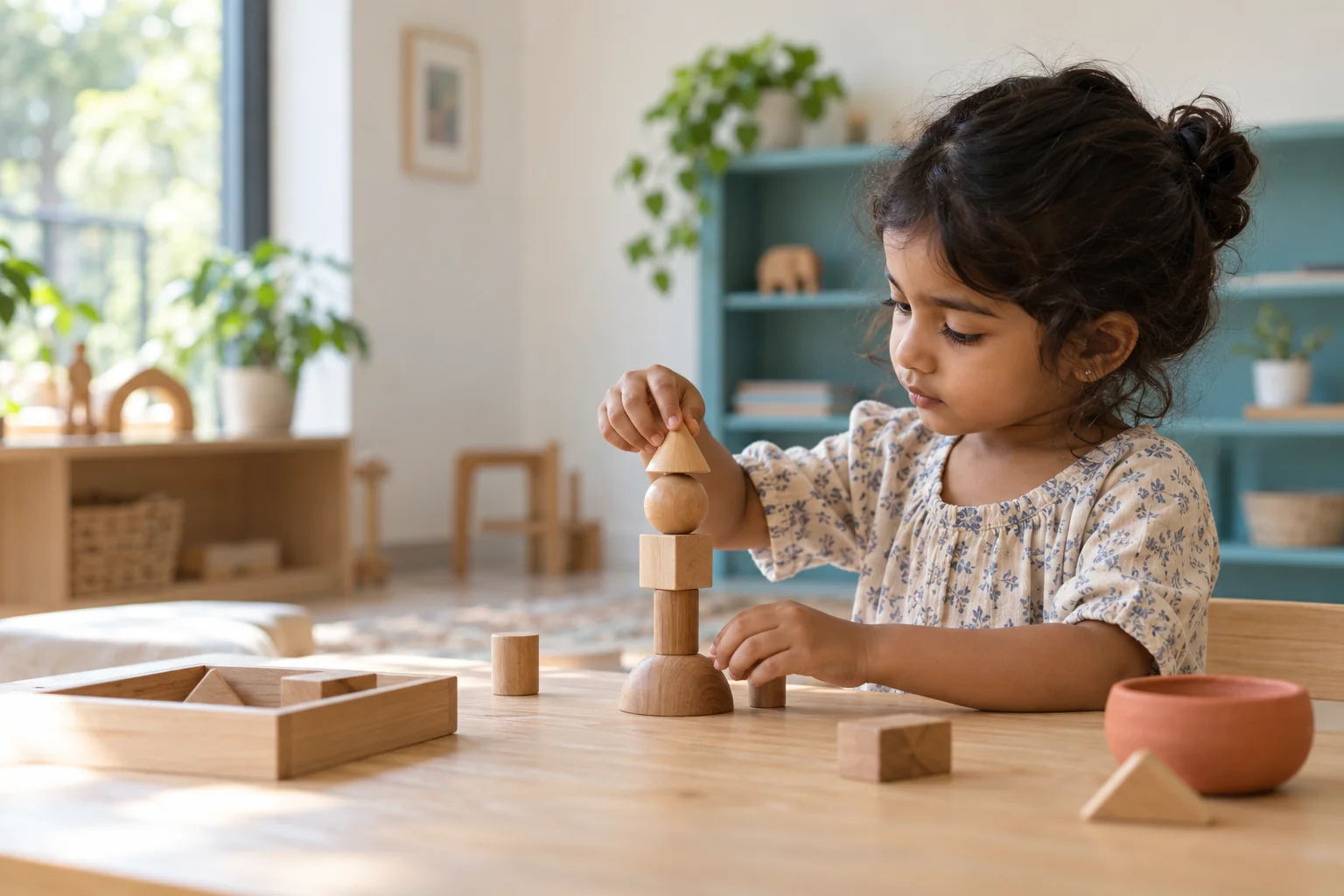
WHAT LEARNING CAN LOOK LIKE
Comfort before confidence
A familiar beginning
A simple welcome routine, a familiar song and an adult who notices a child’s cues can make a new environment less overwhelming. Settling is planned with the family rather than measured against another child.
Learning through the senses
Large blocks, water play where suitable, textured materials, music and picture books invite children to explore. Materials and activities need to be selected for age and supervised appropriately.
The beginnings of communication
Pointing, gestures, single words and short phrases all have a place. Adults model useful language such as “more”, “help” and “my turn”, while accepting the child’s current way of communicating.
Small steps towards independence
Putting a toy away, carrying a small bag or joining a handwashing routine can be meaningful achievements. Personal care and toilet-learning arrangements should be agreed before joining.
At home, keep it simple.
A few relaxed minutes of shared attention are often more useful than a long task. Choose an activity your child enjoys and stop before it becomes a struggle.
- Read a familiar picture book together without testing every word.
- Practise a short goodbye routine and talk positively about returning.
- Offer a safe choice between two familiar toys or activities.
These examples illustrate the planned learning approach, not fixed milestones or promises of a particular outcome.
Next: Explore a sample preschool day · How learning can be observed · Discuss a place
YOUR QUESTIONS, THOUGHTFULLY ANSWERED
Useful to know.
What is the proposed Playgroup entry age?
Children aged 2 to under 3 on 1 June may enquire, with individual placement discussed by the team.
What is the proposed session time?
The planning session is 9:00–11:30 AM, Monday to Friday. Confirm the final timetable before enrolment.
How do you support separation worries?
We propose shorter initial sessions and gradual settling based on comfort. Exact parent participation and support arrangements will be discussed individually.
Will there be homework?
Formal written homework is not proposed. Shared play, conversation and reading at home can support the experience.
NEED ADDITIONAL CARE?
Plan the complete day.
If you need care beyond the preschool session, discuss a daycare add-on. Confirm hours, handover, meals, rest and collection as one complete arrangement.
Explore daycare ↗